From ‘Grit’ to ‘Situated’
Predictions for Duckworth’s new book ‘Situated’ to be released to tomorrow, Sept 1!
TLDR, bulleted predictions about content:
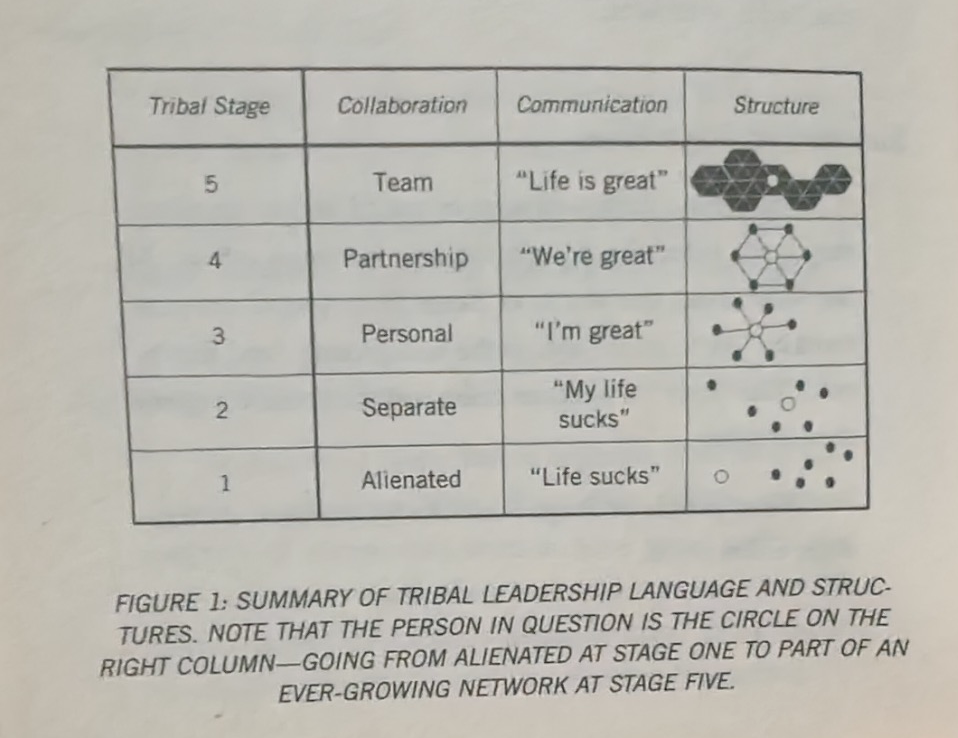
Connection is paramount. I think ‘Situated’s’ connection discussion may look a lot like that of ‘Tribal Leadership’: Direct connection matters, and direct connections within a densely connected network is when the magic really happens!
Making space for figuring out your passions and for pursuing them matters. This relates to Duckworth’s ‘phones in focus’ project. I think a big focus for ‘Situated’ will be that using tech unstrategically eats up time and attention. There’s a ‘situatedness’ in not being tech- overwhelmed.
Immersive experiences are important. ‘Situated learning’ - learning that happens in a context and in a community – immersive learning - and the stickiness and profoundness of the learning that happens – the learning is nearly unforgettable.
vis-a-vis grit: being ‘situated’ (as described in 1,2&3) is probably as or more important to success than the individual characteristics of passion and perseverance constituting grit. And if there are not pathways to succeed (if you are ‘unsituated’), then it could be foolish to continue in the same path, and prioritizing ‘getting situated’ is probably the right thing to do.
Full narrative:
Recently I’ve shared this figure, ‘Gritty as West Point Cadets?’ My interest in sharing the plot has been more about how the code can mirror an intro statistics instructors’ narrative (e.g. those using the very popular ISI curriculum). The code can follow the conceptual buildup of ideas that instructors are likely guide students through!
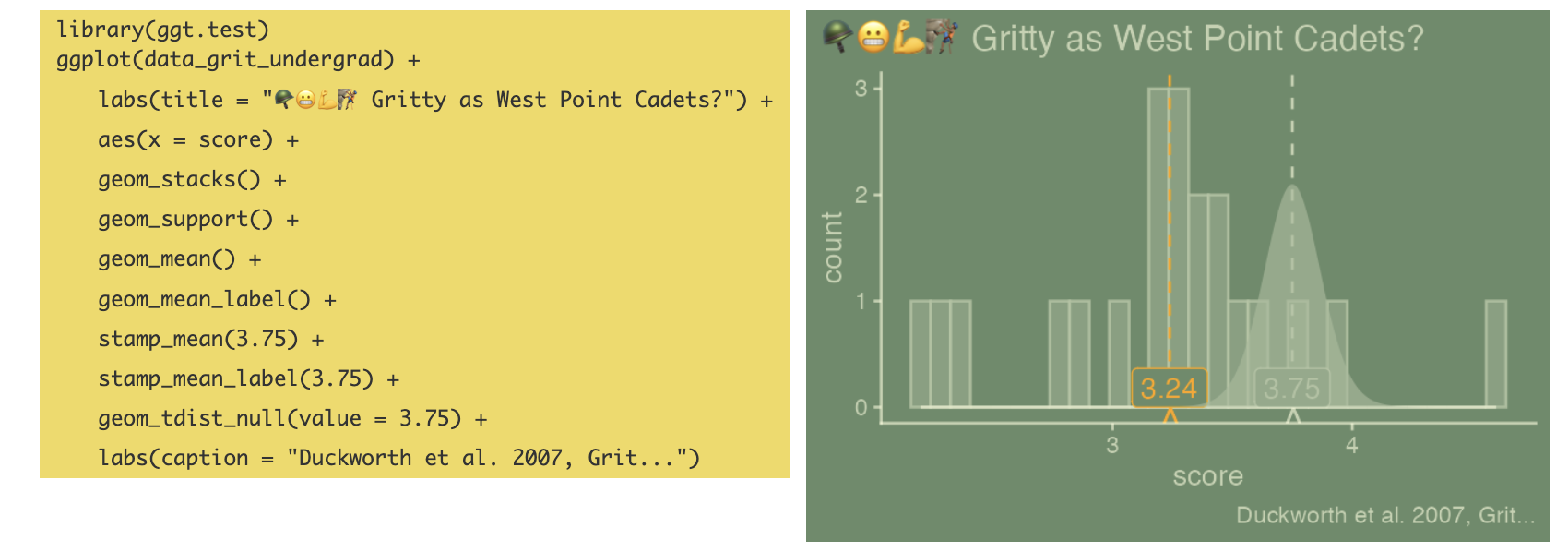
But the subject area *itself*, and not just the analytic technique, is actually pretty interesting too: ‘Are you as gritty as some of the grittiest people on earth?’ West Point Cadets who go through they trying ‘Beast Barracks’ summer program upon enrollment and matriculate into a whole-person development program where Academic, Military, and Physical progress is assessed.
So the conclusion for the t-test here isn’t that surprising. With the sample shown via the histogram, and knowing that the West Point average is 3.75, you’d conclude, ‘my sample doesn’t have the same population mean as West Point cadets.’ (and more statistically spoken, I can reject the null hypothesis of no difference). And I am interested in the subject matter too. I taught at these gritty cadets at West Point for a few years.
If you read Duckworth’s ‘Grit’, you’ll know that the West Point case is at the forefront, the book starts off ‘By the time you set foot on the campus of the United States Military Academy at West Point, you’ve earned it’, and proceeds to describe the gritty cadets for the next eight pages…